Hamish - 027 432 1172
    Gotham Universal Ltd
    • Home
    • Your Service Needs
    • Our Services
    • Blog
    • Contact Us

    Our Blog

    The universe

    How Much Land Does a Man Need? - Leo Tolstoy                                                              (Book review from Women in Literature Facebook page)

    15/11/2025

    0 Comments

     
    Picture
    ​I discovered Tolstoy's "How Much Land Does a Man Need" on a sweltering summer afternoon in a used bookstore that smelled of dust and forgotten promises. The slim volume caught my eye—lost among towering collections of his more famous works like "War and Peace" and "Anna Karenina." Perhaps it was the title's directness that pulled me in, a question disguised as a statement. How much land does a man need? The simplicity of the inquiry belied its devastating power.
    I took the book home and read it that evening as shadows lengthened across my small apartment. By the time darkness had fully settled, something in me had shifted irrevocably. I've read thousands of stories in my lifetime—epic novels that span generations, intricate tales that unravel the human psyche—but none has burrowed into my consciousness quite like this brief parable from Tolstoy's pen. At barely thirty pages, it delivers a blow that leaves you breathless, questioning everything you've ever strived for.
    The story begins innocuously enough. We meet Pahom, a peasant who believes that with just a little more land, he could rid himself of all troubles. "If I had plenty of land," he declares, "I shouldn't fear the Devil himself!" These words—this hubris—hang in the air like a prophecy. The Devil, overhearing this boast, smiles. I felt a chill run down my spine at this moment, sensing the invisible machinery of fate beginning to turn. Tolstoy, with characteristic economy, had set his trap.
    What follows is a journey of escalating desire. Pahom acquires some land, then more, then still more. Each acquisition temporarily satisfies but soon gives way to greater hunger. When he hears of the Bashkirs, a people selling vast tracts of fertile land for almost nothing, he cannot resist. The deal they offer seems too good to be true: for one thousand rubles, Pahom can have all the land he can walk around in a day. The only condition? He must return to his starting point by sunset, or lose both his money and the land.
    The night before reading this story, I had lain awake cataloging my own desires—the promotion I was chasing, the larger home I coveted, the recognition I felt I deserved. As Pahom prepared for his great opportunity, calculating how much land he could encompass, I recognized myself with uncomfortable clarity. How many times had I moved the goalposts of my own contentment? How often had "just a little more" been my silent mantra?
    Tolstoy's genius reveals itself in how he narrates Pahom's fateful day. The rising sun, the careful marking of territory, the initial caution giving way to naked greed as Pahom spots better and better land just a little further on. I found myself physically tensing as I read, my breath quickening as Pahom strays further from his starting point, the sun climbing ever higher. "Turn back," I silently urged him. "You have enough." But desire had become his compass, and the Devil was watching.
    The story's climax unfolds with the terrible precision of Greek tragedy. Pahom realizes too late that he has strayed too far. The descent of the sun becomes a countdown to doom as he races back toward the starting point, his body breaking down even as his determination surges. I remember actually standing up as I read these pages, pacing my small living room, the book clutched in white-knuckled hands. Few works of literature have physically moved me this way—as if my own fate hung in the balance.
    When Pahom finally reaches his goal, collapsing at the feet of the waiting Bashkirs just as the sun disappears behind the horizon, Tolstoy delivers his masterful final stroke. Pahom's servant picks up a spade and digs a grave "long enough for Pahom to lie in"—exactly six feet from head to heel. How much land does a man need? Just enough to be buried in.
    I closed the book and sat motionless in the dark. Something profound had shifted in my perception. The next morning, I called and withdrew my application for a larger apartment. The week after, I declined a promotion that would have doubled my workload for a thirty percent increase in salary. Friends thought I had lost my mind. Perhaps I had found it.
    What makes Tolstoy's parable so devastating is not just its moral clarity but its psychological precision. Pahom is not a bad man. He's not particularly greedy by the standards of his society—or ours. He simply falls prey to a universal human tendency: the belief that contentment lies just beyond the next acquisition. Each time he obtains more land, he experiences a brief satisfaction followed by renewed desire. The cycle is painfully familiar to anyone living in our consumer culture.
    In the months since reading this story, I've found myself invoking Pahom's name like a talisman whenever I feel the pull of unnecessary want. Before making any purchase, before pursuing any new opportunity, I ask myself: Am I chasing this because it truly adds value to my life, or am I just marking out a larger circle of desire? The question has saved me countless dollars and hours—and perhaps something far more precious.
    Tolstoy wrote this story after his spiritual conversion, when he had turned away from the aristocratic life and embraced a simpler existence. Critics often dismiss his later works as overly moralistic, lacking the psychological complexity of his major novels. But such criticism misses the surgical precision with which "How Much Land Does a Man Need" cuts to the heart of human folly. There is no heavy-handed sermon here—only the unforgettable image of a man racing against the setting sun, driven by a desire that can never be satisfied.
    The story's brilliance lies partly in its structure—the perfect arc of rising action that mimics Pahom's expanding greed. But its true power comes from what it leaves unsaid. Tolstoy doesn't need to explicitly condemn materialism; he simply shows us its natural conclusion. The final image—a man stretched out dead on the land he so desperately wanted—contains multitudes of meaning. The grave, that "plot" of earth that we all eventually inherit, becomes the ultimate comment on human ambition.
    I've recommended this story to dozens of friends since reading it, pressing copies into reluctant hands with evangelical fervor. "It's short," I assure them. "It will take you less than an hour." What I don't tell them is how that hour might rearrange their lives. Some return the book with polite thanks and unchanged eyes. Others call me at midnight, voices hushed with revelation. "I just finished it," they say, and I can hear in their tone that they've been initiated into the same understanding that now haunts me.
    Last week, I passed that same used bookstore and found myself drawn inside. At the register, a young woman was purchasing a collection that included "How Much Land Does a Man Need." Our eyes met briefly as the shopkeeper wrapped her purchase. I wanted to say something—to warn her or congratulate her, I wasn't sure which. In the end, I simply nodded. Some journeys we must each undertake alone.
    As I write this, I can see through my window the lights of the city spreading out to the horizon—each point representing a human story of wanting, having, wanting more. Somewhere in that glittering expanse, perhaps someone else is encountering Pahom's fate for the first time, feeling the same seismic shift I experienced. Tolstoy's question continues to reverberate across centuries: How much land does a man need? The answer—so simple, so devastating—waits for each of us at the end of our own measured plot.
    FREE AUDIOBOOK: https://amzn.to/46EyKzI

    Picture
    0 Comments

    Message from author  of 'Boy in a China Shop' Keith Brymer Jones

    7/9/2025

    0 Comments

     
    Picture

    ​​"It doesn't have to be dramatic—it just has to be true. When you put your heart into your work, someone else feels it. That's the magic. That's the power", expressing the emotional power of the authentic work we do in our chosen professions". 
    0 Comments

    The Joy of Collaboration; excerpt from "Chronology of Water" by Lidia Yuknavitch

    14/7/2025

    0 Comments

     
    Picture

    "Whatever it was or was not, there were words. Not just my own. I wrote stories, I wrote books, but the more I wrote the more I saw the door opening behind me, and I saw if I jammed my motherfucking foot in it, more of us would get through. And that we could make things. Together. What we could make was art. How that mattered. With other people I made paintings. With other people I made performances."
    0 Comments

    If You Want to Sing Out, Sing Out; Song by Cat Stevens ‧ 1982                                                                                 Great Career Planning Advice!

    26/6/2025

    0 Comments


    Picture
    Well, if you want to sing out, sing out
    And if you want to be free, be free
    'Cause there's a million things to be
    You know that there are

    And if you want to be high, be high
    And if you want to be low, be low
    'Cause there's a million ways to go
    You know that there are

    You know it's up to you
    Anything you can do
    And if you find a new way
    Well, you can do it today
    Well, you can make it all true
    And you can make it undo
    You see, ah-ah-ah, it's easy, ah-ah-ah
    You only need to know

    And if you want to be her, be her
    And if you want to be you, be you
    'Cause there's a million things to do
    You know that there are

    And if you want to say yes, say yes
    And if you want to say no, say no
    'Cause there's a million ways to go
    You know that there are

    You know it's up to you, anything you can do
    And if you find a new way
    Well, you can do it today
    Well, you can make it all true
    And you can make it undo
    You see, ah-ah-ah, it's easy, ah-ah-ah
    You only need to know

    Well, if you want to sing out, sing out
    And if you want to be free, be free
    'Cause there's a million things to be
    You know that there are

    And if you want to be high, be high
    And if you want to be low, be low
    'Cause there's a million ways to go
    ​

    You know that there are
    You know that there are
    You know that there are
    You know that there are
    You know that there are
    You know that there are
    0 Comments

    Girl Interrupted By Susanna Kaysen

    16/3/2025

    0 Comments


    l love the author's profound experience of the 'Girl Interrupted at Her Music' by Vermeer at the Frick NYC

    Picture
    In 1967, after a session with a psychiatrist she'd never seen before, eighteen-year-old Susanna Kaysen was put in a taxi and sent to McLean Hospital. Her memoir of the next two years is a "poignant, honest ... triumphantly funny ... and heartbreaking story" (The New York Times Book Review).The ward for teenage girls in the McLean psychiatric hospital was as renowned for its famous clientele--Sylvia Plath, Robert Lowell, James Taylor, and Ray Charles--as for its progressive methods of treating those who could afford its sanctuary. Kaysen's memoir encompasses horror and razor-edged perception while providing vivid portraits of her fellow patients and their keepers. It is a brilliant evocation of a "parallel universe" set within the kaleidoscopically shifting landscape of the late sixties.
    Girl, Interrupted is a clear-sighted, unflinching document that gives lasting and specific dimension to our definitions of sane and insane, mental illness and recovery.
    0 Comments

    Just sharing a wonderful Euphonium work with the NZSO                                                      Love it!!!!!!! especially the spectacular finale - go Adam!!!!!

    9/2/2025

    0 Comments

     
    ​https://www.youtube.com/watch?v=pwol_2eezJk
    Picture
    Picture
    0 Comments

    Don't Wait Too Long  ~ Madeleine Peyroux

    31/12/2024

    0 Comments

     
    Picture

    You can cry a million tears

    You can wait a million years
    If you think that time will change your ways
    Don't wait too long

    When your morning turns to night
    Who'll be loving you by candlelight
    If you think that time will change your ways
    Don't wait too long

    Maybe I've got a lot to learn
    Time can slip away
    Sometimes you got to lose it all
    Before you find your way
    Take a chance and play your part
    Make romance, it might break your heart
    But if you think that time will change your ways
    Don't wait too long

    It may rain, it may shine
    Love will age like fine red wine
    But if you think that time will change your ways
    Don't wait too long

    Baby, you and I got a lot to learn
    Don't waste another day
    Maybe you got to lose it all
    Before you find your way
    Take a chance, play your part
    Make romance, it might break your heart
    But if you think that time will change your ways
    Don't wait too long
    ​

    Don't wait
    Don't wait
    0 Comments

    Art and Literature - Author Chloë Ashby

    18/11/2024

    0 Comments

     
    Picture
    It’s probably no surprise that an art critic would smuggle art into her fiction. I’m certainly not the first. Artists and writers have long been borrowing from one another, their work intertwining like ribbons. In the 19th century, the relationship deepened: art fired the imagination of French novelists Honoré de Balzac, Marcel Proust, Émile Zola.

    My first novel, 
    Wet Paint, began with an image, too. I first saw Édouard Manet’s A Bar at the Folies-Bergère in the flesh while I was studying at the Courtauld Institute of Art. The barmaid, Suzon, has been with me ever since, and she’s also a constant companion for my protagonist, Eve, who visits her once a week. Eve’s eyes snag on her pink cheeks, heavy eyes, pressed-together lips. She’s trying to work out how she’s feeling: sad, tired, stuck, the kind of lonely that can gnaw even in a crowd. When Eve becomes a barmaid herself, and a life model, the two women’s lives begin to blur.
    Picture
    0 Comments

    Peace Train - Yusuf Islam/Cat Stevens

    14/8/2024

    0 Comments

     
    Picture
    ​Now I've been happy lately
    Thinking about the good things to come
    And I believe it could be
    Something good has begun
    Oh, I've been smiling lately
    Dreaming about the world as one
    And I believe it could be
    Someday it's going to come

    'Cause out on the edge of darkness
    There rides the peace train
    Oh, peace train take this country
    Come take me home again

    Now I've been smiling lately
    Thinkin' about the good things to come
    And I believe it could be
    Something good has begun

    Oh, peace train sounding louder
    Glide on the peace train
    Ooh-ah, ee-ah, ooh-ah
    Come on now, peace train
    Yes, peace train holy roller
    Everyone jump upon the peace train
    Ooh-ah, ee-ah, ooh-ah
    Come on now, peace train

    Get your bags together
    Go bring your good friends too
    Because it's getting nearer
    It soon will be with you
    Now come and join the living
    It's not so far from you
    And it's getting nearer
    Soon it will all be true

    Oh, peace train sounding louder
    Glide on the peace train
    Ooh-ah, ee-ah, ooh-ah
    Come on now peace train
    Peace train

    Now I've been crying lately
    Thinkin' about the world as it is
    Why must we go on hating?
    Why can't we live in bliss?

    'Cause out on the edge of darkness
    There rides a peace train
    Oh, peace train take this country
    Come take me home again

    Oh, peace train sounding louder
    Glide on the peace train
    Ooh-ah, ee-ah, ooh-ah
    Come on now, peace train
    Yes, peace train holy roller
    Everyone jump upon the peace train
    Ooh-ah, ee-ah, ooh-ah
    Come on, come on, come on
    Yes, come on, peace train
    Yes, it's the peace train
    ​
    Ooh-ah, ee-ah, ooh-ah
    Come on now, peace train
    Oh, peace train
    Ooh-ah, ee-ah, ooh-ah
    0 Comments

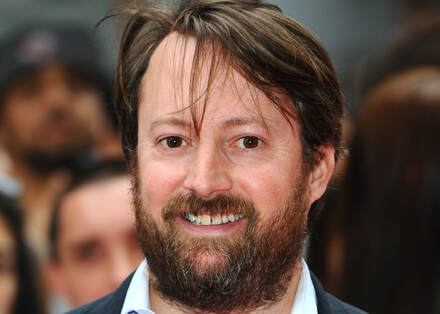
    Unruly - A History of England's Kings and Queens by David Mitchell

    28/3/2024

    0 Comments

     
    Picture
    ​
    As I confront my own puzzled sense of national identity, I have reached for the best way of explaining my own people, and people in general, and that’s history. So this book may be about all the kings and queens who ruled England – and it’s mainly kings, the olden days being, among many many many other flaws, extremely sexist – but it’s not really about the past. It’s about history. History the school subject, the hobby, the atmosphere, the wonky drawings of kings, the grist to heritage’s mill-that’s-been-converted-into-a-café, the sense of identity.

    History is a very contemporary thing – it’s ours to think about, manipulate, use to win arguments or to justify patriotism, nationalism or group self-loathing, according to taste. In contrast, the past is unknowable. It’s as complicated as the present. It’s an infinity of former nows all as unfathomable as this one. That’s why historians end up specializing in tiny bits of it.
    ​
    For England, in particular, history is about who we collectively are and how we feel about it. It’s one of the attempted answers to the great human question: what the hell is going on? Most animals don’t ask that question, which is why you can put a massive Ikea next to a field of sheep and they just keep on grazing. Not even twenty minutes of bleats and gestures and questioning looks, they’re just not interested. But a vast amount of human endeavour is an attempt to answer it in different ways: all the sciences and all the humanities. Microscopes, philosophies, expeditions, religions and poems are all having a go.
    0 Comments
    <<Previous

      Author

      Hamish Ott. I am the Managing Director of Gotham Universal Limited (established 1998).

      View my profile on LinkedIn

      Archives

      June 2025
      March 2025
      February 2025
      December 2024
      November 2024
      August 2024
      March 2024
      January 2024
      July 2023
      May 2023
      February 2023
      January 2023
      December 2022
      November 2022
      July 2022
      April 2022
      October 2021
      September 2021
      March 2021
      December 2020
      March 2020
      February 2020
      November 2019
      October 2019
      May 2019
      May 2018
      February 2018
      November 2017
      March 2017
      September 2016
      June 2016
      April 2016
      January 2016
      December 2015

      Categories

      All

    About Us

    Gotham Universal Ltd are based in Christchurch, New Zealand. We provide business services such as organisation development and HR consulting to national and local clients in the private, public and not for profit business sectors. 

    ​​
    We have over 25 years experience working in business management, organisation development and assisting organisations with their strategies, structures and people. ​

    Quick Links

    Home
    ​Your Service Needs
    Our Services
    Blog
    Contact Us
    Our Privacy Policy

    Our Location

    Gotham Universal Limited
    P O Box 76014
    Christchurch 8548
    New Zealand

    027 432 1172

    [email protected]


    Copyright 2018, Gotham Universal Ltd. All rights reserved  | Editor | Website by QPM Design
    Back to top